Understand environmental changes, so management decisions are grounded in evidence.
For construction environments, industrial parks, waterways, and water infrastructure, centrally manage dust, noise, weather, gas, water-level, and flow data, with support for station maps, anomaly alerts, and statistical reports.
Discuss My Monitoring Plan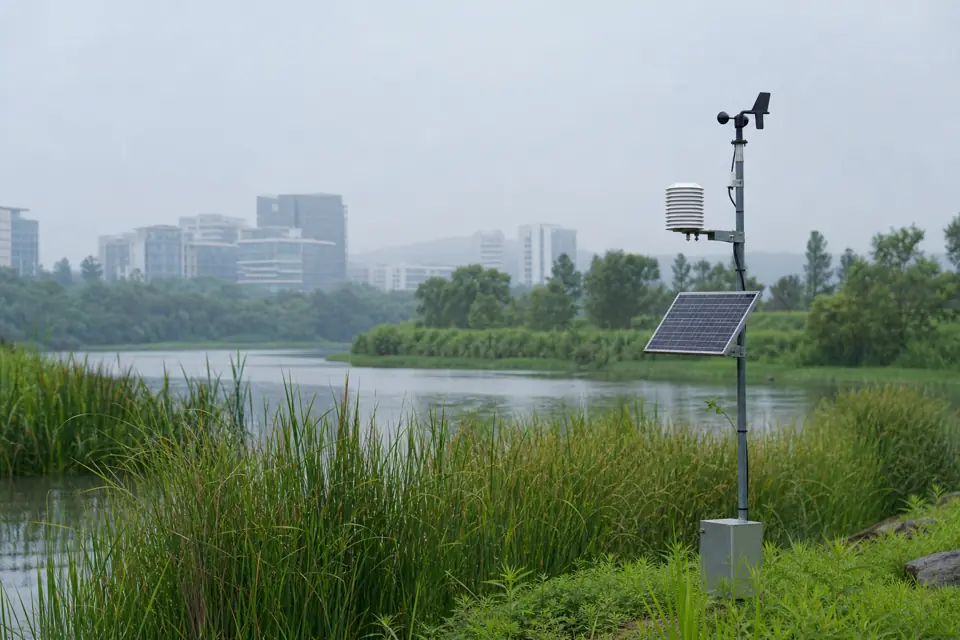
First understand the site,
then organize monitoring data.
Environmental monitoring devices vary widely in model, data units, and calibration methods. Before comparing across sites, clarify the measurement range, units, sampling interval, and data validity, and handle equipment faults separately from environmental events.
What to measure, how to connect, and how to analyze it.
Display real-time values, period-based statistics, and limit exceedance records by station.
Analyze changes against weather conditions, and configure units and rules according to the gases being detected.
Generate water-level and flow time series to support custom calculations and statistics.
Identify offline devices, data interruptions, and abnormal constant values, with support for maintenance records.
Integrate sensors, monitoring instruments, and gateways from various manufacturers. Verify the device model, accuracy, protocol, and actual adaptation scope during the solution phase.
Keep monitoring projects running through professional workflows.
Create monitoring records by region, site, and device
Standardize units, timestamps, and quality flags
Set environmental thresholds and device anomaly rules
Generate maps, period-based statistics, and environmental monitoring reports
See the process clearly,
and deliver results.
International projects must determine monitoring plans based on the laws, standards, and owner requirements of the project location. The Chinese standards mentioned on this page are provided only to illustrate relevant engineering scenarios and do not represent direct applicability in other countries or regions.
Environmental and water monitoring FAQs
Let's work through your questions, from integration to delivery.
Discuss Project RequirementsCan existing dust and weather monitoring devices be integrated?
After providing the equipment model, protocol, sample messages, and communication method, integration can be evaluated. Both public and proprietary protocols first undergo parsing, unit mapping, and data verification.
Does it support gas detectors?
Support the integration of gas detection data through actual interfaces, with configuration for gas types, measurement ranges, units, thresholds, and notification rules. On-site safety interlock requirements must be confirmed separately during the solution design phase.
Turn your site requirements, into a monitoring project that can be implemented.
Start with your environmental and water monitoring parameters, equipment, and delivery goals, and we will work with you to develop a concrete plan.